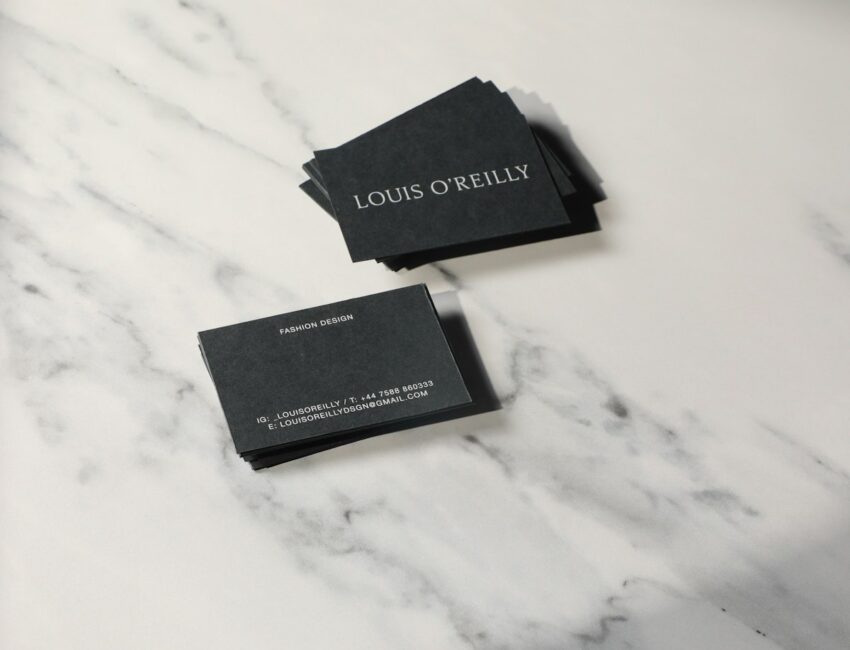
Most people spend an evening on the layout of their card and about ten seconds on the paper. That is backwards. Before anyone reads your job title, they feel the card between their fingers, and that first touch sets the tone for everything printed on it.
Why the stock matters more than you think
A card is a small object that gets handled, slipped into wallets and pulled out again weeks later. The weight of the board, the whiteness of the surface and the way ink sits on it all change how your design reads. A crisp logo on a bright white sheet looks sharp and modern. The same logo on a warm ivory feels quieter and more traditional. Neither is wrong; they simply say different things.
The main families of paper
A good shop will show you several options rather than one house stock. PrintVolution, for example, lists nine papers for its standard cards. Broadly they fall into three groups:
- Art card in 250gsm or 300gsm: smooth, bright and a sensible starting point for colourful designs and photos.
- Textured and tinted whites such as Tangerine White, Maple Bright, Maple White and Pearlux White: each has its own surface and shade, which suits minimal layouts with plenty of white space.
- Heavier boards like 350gsm Grandeur White and 300gsm Shiruku Ivory: thicker in the hand, for people who want the card itself to make a statement.
Match the paper to the person
Think about who receives the card. An architect or designer might prefer a textured white that lets the typography breathe. A café owner handing cards across the counter might want bright art card that shows off food photography. A lawyer or consultant may lean towards ivory for a more formal feel. Ask for the stock that fits how you actually meet people, not the one that sounds most impressive on a price list.
Where to order
If you would like to compare these papers before deciding, the product page for namecard printing singapore at PrintVolution lets you switch between all nine stocks and add matt or gloss lamination, rounded corners or foil. Cards come in boxes of 100, one design per box, so a team with several names simply orders a box for each person.
Whatever you choose, give the paper the same attention you gave the logo. It is the part of the card people remember with their hands.